
The History of Gajak: From Royal Courts to Your Home
Gajak's journey from the royal courts of Rajasthan to homes across India is a fascinating tale of tradition, craftsmanship, and cultural heritage. Let's explore how this beloved sweet became an integral part of Indian celebrations.
Ancient Origins
The history of Gajak dates back centuries to the princely states of Rajasthan. Historical records suggest that sesame-based sweets were prepared in royal kitchens as early as the 15th century, though the exact origins remain shrouded in the mists of time.
Royal Patronage
Rajasthani maharajas were known for their refined tastes and patronage of culinary arts. Gajak, with its labor-intensive preparation and premium ingredients, was considered a delicacy worthy of royal tables. Master sweet-makers (halwais) competed to create the finest Gajak for royal celebrations.
The Rajasthani Connection
Geography and Climate
Rajasthan's climate played a crucial role in Gajak's development:
- Cold Winters: Created demand for warming foods like sesame sweets
- Sesame Cultivation: Rajasthan's soil suited sesame farming
- Sugarcane Fields: Provided jaggery, the traditional sweetener
- Desert Conditions: Required energy-dense foods for sustenance
Cultural Significance
In Rajasthani culture, Gajak became associated with:
- Winter festivals like Makar Sankranti
- Wedding celebrations
- Religious offerings
- Hospitality and gift-giving
The Artisan Tradition
Master Craftsmen
Gajak-making became a specialized craft passed down through generations. Families like ours at Sahu Gajak Bhandar dedicated themselves to perfecting the art, with each generation adding refinements while preserving core techniques.
The Hand-Hammering Technique
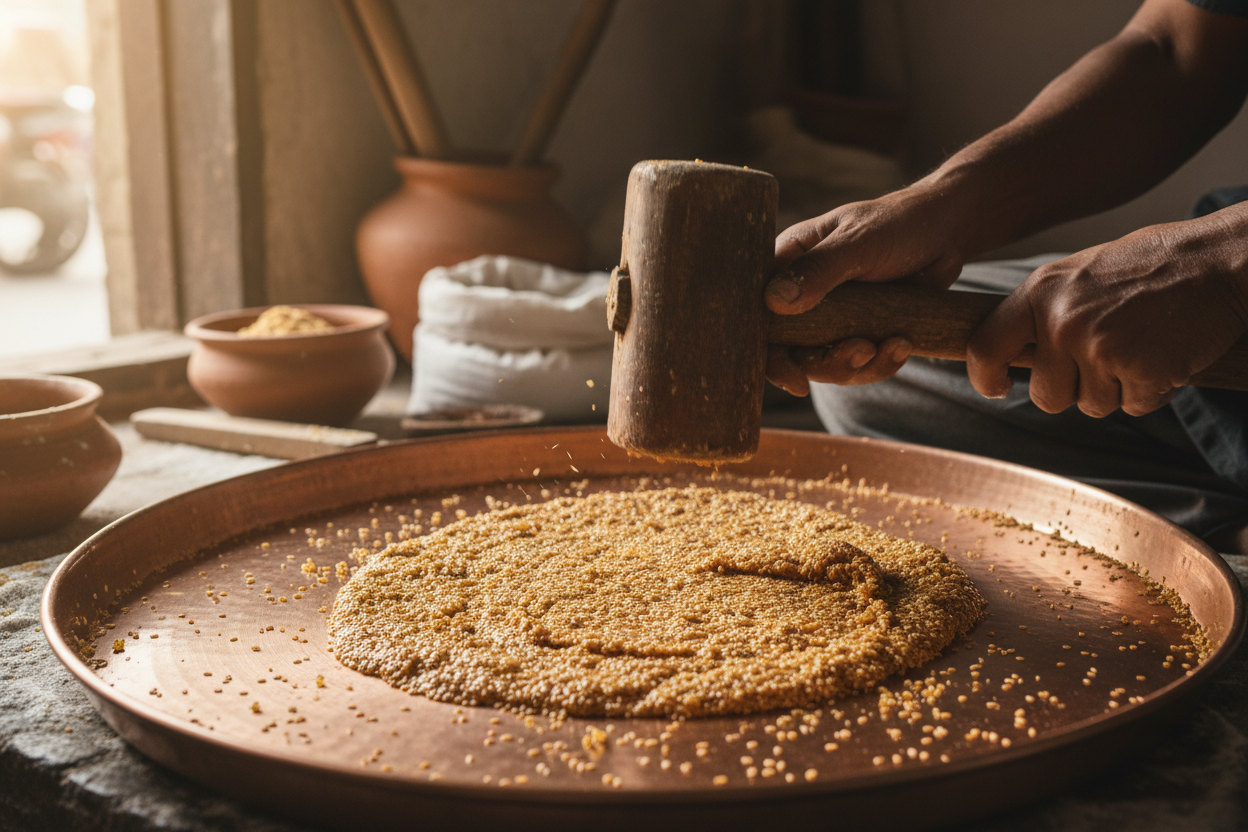
The signature hand-hammering method developed over centuries. Artisans discovered that 10-15 hours of rhythmic pounding:
- Released sesame oils naturally
- Created perfect texture
- Allowed precise control over consistency
- Resulted in superior flavor
This technique, still used today, distinguishes authentic Gajak from modern machine-made versions.
Spread Across India
Trade Routes
As Rajasthani traders traveled across India, they carried Gajak with them. The sweet's long shelf life made it ideal for journeys, and its unique taste won admirers wherever it went.
Regional Variations
Different regions adapted Gajak to local tastes:
- Punjab: Emphasized peanut varieties for Lohri
- UP: Developed softer, barfi-style versions
- Bihar: Created til-gud combinations for Makar Sankranti
- Rajasthan: Maintained traditional crispy, flaky style
The Sahu Gajak Bhandar Legacy
Years of Tradition
Our family began making Gajak generations ago in Rajasthan. What started as a small operation serving local communities grew into a trusted name, while our commitment to traditional methods has remained unchanged.
Preserving Heritage
Through British rule, independence, and modernization, we've maintained:
- Original recipes from princely era
- Hand-hammering techniques
- Small-batch preparation
- Premium ingredient standards
- Artisan craftsmanship
Modern Evolution
Challenges of Industrialization
The 20th century brought challenges as factories began mass-producing Gajak. While convenient, machine-made versions couldn't replicate the authentic texture and flavor of traditional preparation.
Revival of Artisan Foods
Today, there's renewed appreciation for authentic, handmade foods. Consumers increasingly value:
- Traditional preparation methods
- Natural ingredients
- Cultural heritage
- Artisan craftsmanship
- Authentic flavors
Gajak in Contemporary India
Festival Essential
Gajak remains central to winter festivals across India, connecting modern celebrations to ancient traditions.
Health Food Recognition
Nutritionists now recognize Gajak's health benefits - sesame's nutrients and jaggery's minerals make it a wholesome sweet.
Culinary Innovation
Chefs incorporate Gajak into fusion desserts, introducing it to new audiences while honoring its heritage.
Global Reach
Indian diaspora communities worldwide maintain Gajak traditions, sharing this piece of heritage with new generations and introducing it to global audiences.
The Future of Gajak
As we look ahead, we're committed to:
- Preserving traditional techniques
- Training new artisans
- Educating consumers about authentic Gajak
- Adapting to modern needs while maintaining quality
- Sharing our heritage story
Experience Living History
When you enjoy Sahu Gajak Bhandar's Gajak, you're tasting history - a sweet that has delighted generations, from royal courts to family celebrations. Every crispy, flaky bite connects you to centuries of tradition.
Taste 150 years of heritage - order authentic Rajasthani Gajak today!