Gajak vs Chikki vs Tilkut vs Revdi — What is the Difference?
If you have ever browsed for traditional Indian winter sweets online, you have almost certainly come across the names Gajak, Chikki, Tilkut, and Revdi — sometimes used interchangeably, sometimes listed side by side. All four are traditional sesame or peanut sweets popular during Makar Sankranti and Lohri. All four are made with jaggery. But they are distinctly different sweets, each with its own preparation method, texture, regional origin, and eating experience.
This guide explains each sweet clearly, compares them side by side, and helps you decide which one to buy, gift, or serve.
What is Gajak?
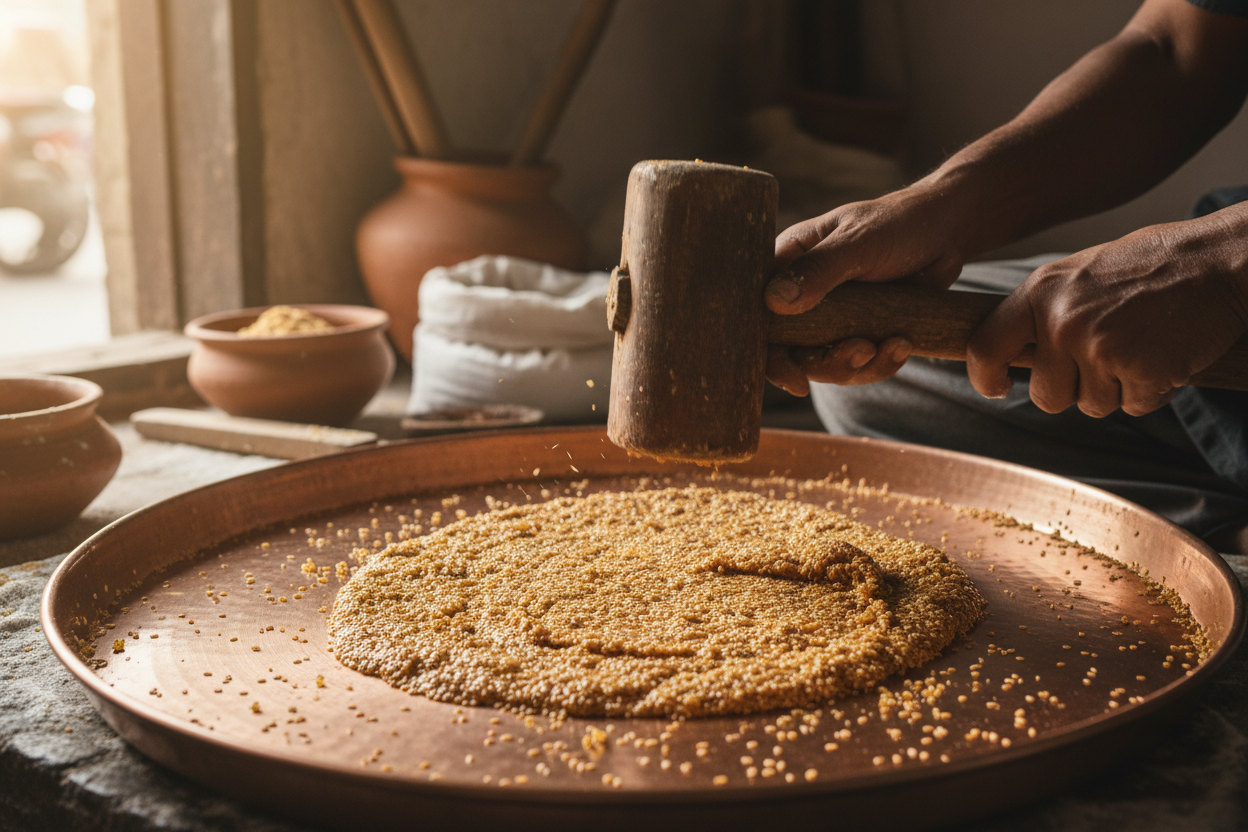
Gajak (also spelled Gachak, Gazak, or Gajjak) is a traditional Indian sweet made by repeatedly hand-hammering a hot mixture of roasted sesame seeds (til) and jaggery (gur) into thin, crisp, flaky layers. The hammering process — sometimes continued for several hours — develops the distinctive layered structure and hard, snappy texture that defines good gajak.
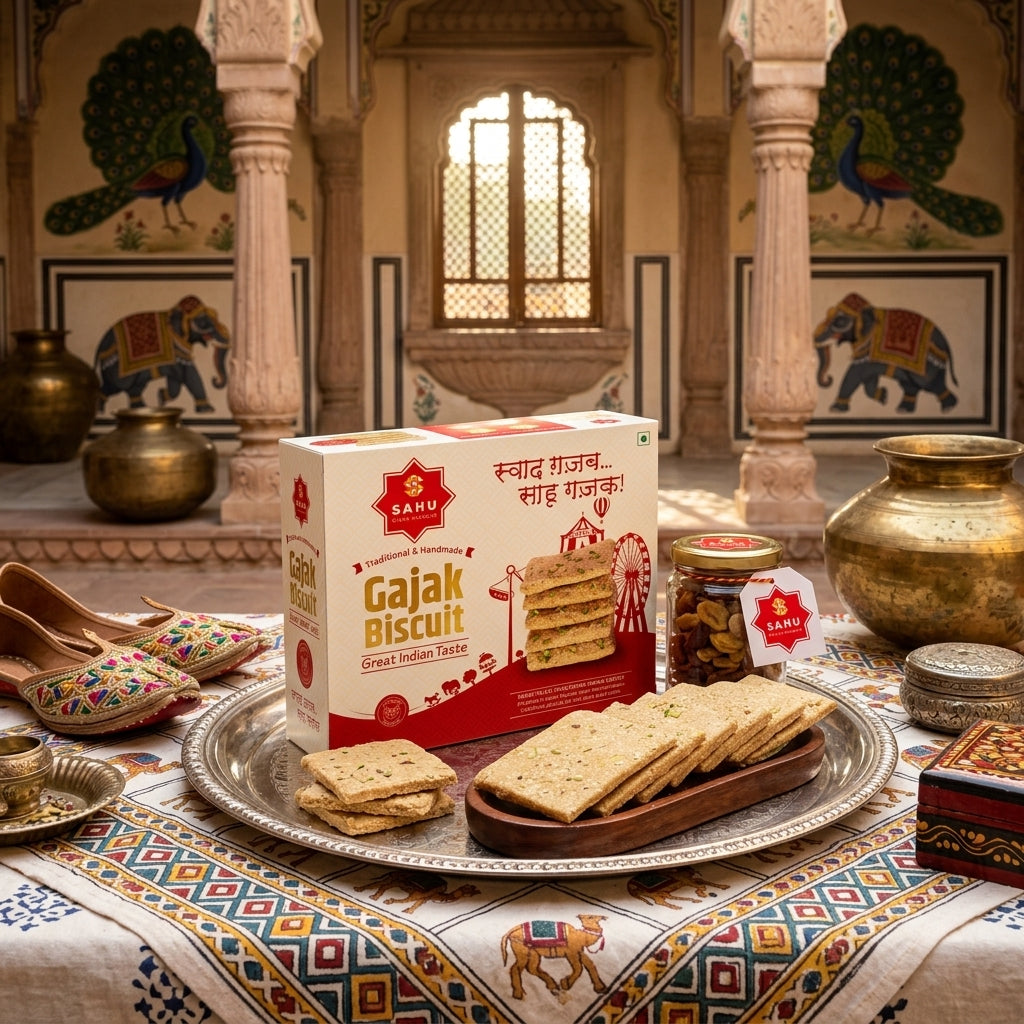
Gajak originates from Rajasthan and the Morena region of Madhya Pradesh, and is the most iconic Makar Sankranti sweet from North India. It comes in several forms — Gajak Biscuit (flat, biscuit-shaped), Gajak Roll (cylindrical), Gajak Barfi (softer, denser barfi-style), Khastha Gajak (extra crispy), and Dry Fruit Gajak (with almonds, cashews, pistachios).
Texture: Hard, crisp, flaky, snappy.
Main ingredients: Sesame seeds (til), jaggery (gur), sugar, cow ghee.
Preparation: Repeated hand-hammering of a hot sesame-jaggery mixture.
Origin: Rajasthan and Madhya Pradesh.
Shapes available: Biscuit, roll, barfi, khastha (crispy slab).
What is Chikki?
Chikki is a hard brittle sweet made by setting roasted peanuts (or occasionally sesame, dry fruits, or other nuts) in hot jaggery syrup, then pressing the mixture flat and cutting it into rectangular pieces as it cools. The result is a dense, hard, crackle-when-you-bite sweet — different from gajak in both ingredients and method.
While gajak is almost always sesame-based, Chikki is most commonly peanut-based (Mungfali Chikki or Groundnut Chikki). Sesame Chikki also exists, but the dominant variety across India is the peanut version. Chikki is popular across Maharashtra, Gujarat, Karnataka, and North India. The Maharashtra town of Lonavala is particularly famous for chikki.
Texture: Hard, dense, crunchy brittle — snaps cleanly.
Main ingredients: Roasted peanuts (groundnuts / mungfali), jaggery (gur).
Preparation: Peanuts set in jaggery syrup, pressed flat, cut into pieces.
Origin: Widespread across India — Maharashtra, Gujarat, North India.
Shapes available: Flat rectangular slabs, round (Gol Chikki).
What is Tilkut?
Tilkut (also written as Til Kut or Tilkoot) is a traditional sesame-jaggery sweet made by pounding — not hammering — roasted sesame seeds with jaggery into a crumbly, granular mixture. Unlike gajak, which is worked into hard flaky layers, tilkut is lighter and softer in texture, dissolving more gently on the tongue.
Tilkut is especially associated with Sawai Madhopur in Rajasthan and the Gaya region of Bihar, where it is a celebrated local speciality. It is one of the most traditional Makar Sankranti sweets in North India and is closely related to gajak in ingredients but distinct in method and texture.
Texture: Crumbly, soft, granular — dissolves gently, less hard than gajak.
Main ingredients: Sesame seeds (til), jaggery (gur), sugar, cow ghee, clove, cardamom.
Preparation: Roasted sesame pounded with jaggery into a crumbly mixture.
Origin: Rajasthan (Sawai Madhopur) and Bihar (Gaya).
Shapes available: Flat discs or pressed blocks.
What is Revdi (Rewari)?
Revdi — known as Rewari in Haryana and Punjab, Revri in parts of Rajasthan, and Rewadi or Rebdi in UP and Bihar — is a small, coin-shaped sesame candy made by coating roasted sesame seeds in a hot jaggery or sugar syrup and shaping them into flat round discs as they cool. It is the most bite-sized and portable of the four sweets, and the one most commonly handed out as a festival treat during Makar Sankranti and Lohri.
Unlike gajak, chikki, and tilkut — all of which come in larger pieces or slabs — revdi is a small individual candy, typically 2–3 cm across. It comes in two versions: Til Revdi (jaggery-based, earthier and darker) and Sugar Revdi (sugar-based, lighter and milder).
Texture: Crunchy, light, bite-sized sesame candy.
Main ingredients: Sesame seeds (til), jaggery (gur) or sugar, cow ghee, cardamom.
Preparation: Sesame seeds coated in jaggery or sugar syrup, shaped into round coins.
Origin: North India — Rajasthan, Haryana, Punjab, UP, Bihar.
Shapes available: Small round discs (coin-shaped).
Gajak vs Chikki vs Tilkut vs Revdi — comparison at a glance
| Gajak | Chikki | Tilkut | Revdi (Rewari) | |
|---|---|---|---|---|
| Main ingredient | Sesame (til) | Peanuts (mungfali) | Sesame (til) | Sesame (til) |
| Sweetener | Jaggery + sugar | Jaggery | Jaggery + sugar | Jaggery or sugar |
| Preparation | Hand-hammering | Set in syrup, pressed flat | Pounding | Coated in syrup, shaped |
| Texture | Hard, flaky, crisp | Hard, dense brittle | Crumbly, soft | Crunchy, light, bite-sized |
| Size | Medium to large pieces | Flat slabs or round discs | Flat discs or blocks | Small coin-sized |
| Origin | Rajasthan, MP | Maharashtra, Gujarat | Rajasthan, Bihar | North India (all states) |
| Festival | Makar Sankranti, Lohri | Makar Sankranti, Lohri | Makar Sankranti | Makar Sankranti, Lohri |
Which one should you buy?
Buy Gajak if you want the most iconic Makar Sankranti sweet — crispy, flaky, and deeply satisfying. It is also the best option for gifting because it comes in the widest range of sizes and varieties.
Buy Chikki if you prefer peanut-based sweets, or want something that children and adults both enjoy easily. Peanut Chikki is the most universally liked of the four across all age groups.
Buy Tilkut if you want something softer than gajak — same sesame-jaggery flavour but more delicate and crumbly. A good choice for older family members who find hard gajak difficult to eat.
Buy Revdi if you want a shareable, bite-sized festival sweet for distributing at gatherings, offices, or events. Revdi (Rewari) is ideal for Makar Sankranti gifting in small quantities to a large number of people.
Buy a mix if you want the full traditional Makar Sankranti experience — gajak, tilkut, revdi, and chikki together is the classic Rajasthani festival sweet spread.
Can you eat all four together?
Yes — and traditionally, that is exactly how they are enjoyed. A Makar Sankranti sweet box from Rajasthan typically includes all four in different quantities. Each brings a different texture and flavour experience, and together they represent the full range of North India's sesame-jaggery sweet tradition.
Where to buy authentic Gajak, Chikki, Tilkut and Revdi online
Sahu Gajak Bhandar has been making all four sweets in Menpura, Sawai Madhopur, Rajasthan since the 1870s — using the same traditional recipes, with no preservatives, no liquid glucose, and no synthetic colours. Browse our full range: