

Sesame and Jaggery in Indian Winter Traditions
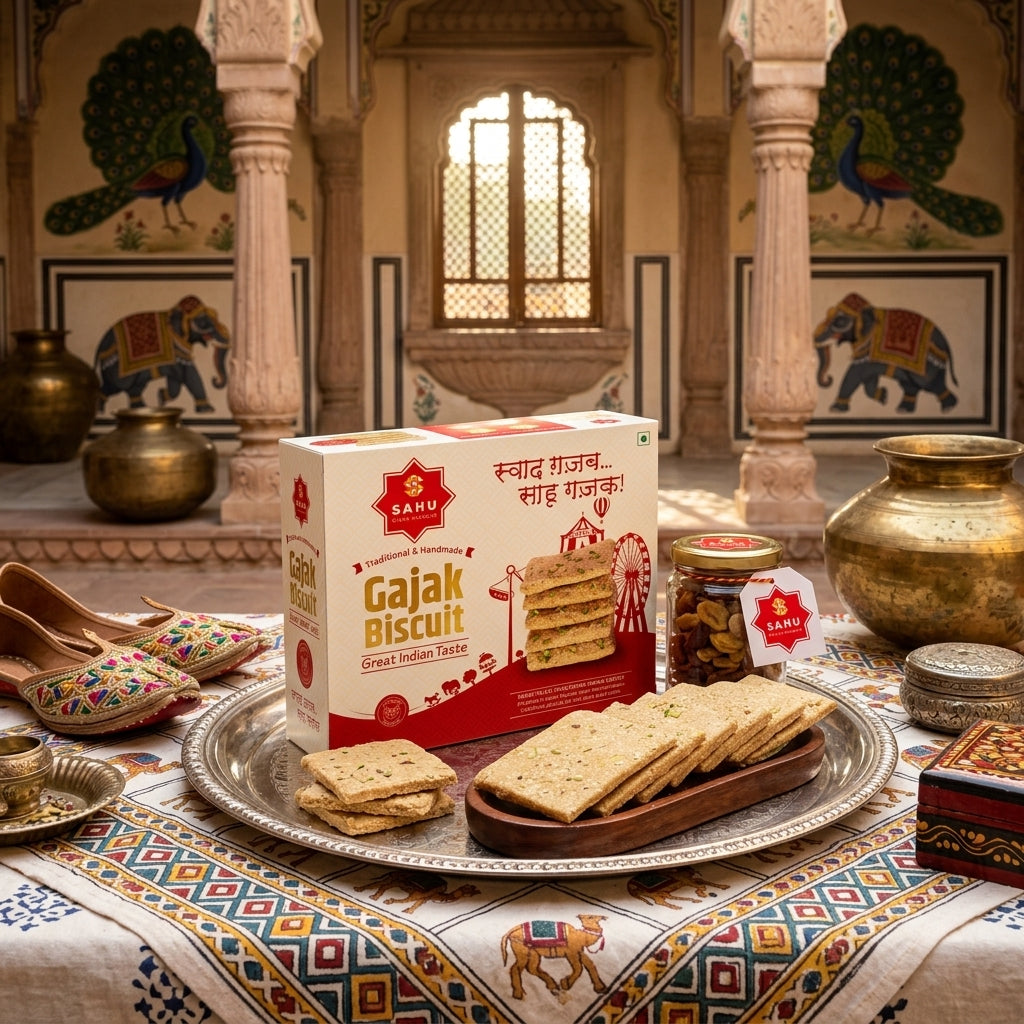
Sesame seeds (til) and jaggery (gur) have been central to Indian winter food traditions for centuries. Eaten together in sweets like Gajak, Tilkut, Revdi, and Til Ladoo, they are the defining flavours of Makar Sankranti and Lohri — and a staple of Rajasthani kitchens throughout the cold months.
This article explores why sesame and jaggery feature so prominently in Indian winter culture, what these ingredients are, and how they come together in traditional sweets.
What are sesame seeds (til)?
Sesame (Sesamum indicum), known as til in Hindi, is one of the oldest cultivated oilseeds in India. Sesame seeds are small, flat, and oil-rich, with a naturally nutty flavour that intensifies when roasted. They are a staple ingredient in Indian cooking, used in sweets, chutneys, breads, and cooking oils.
Sesame seeds contain naturally occurring nutrients including calcium, iron, magnesium, zinc, and protein, as well as sesame oil, which gives roasted sesame its distinctive flavour. (General nutritional information — not medical advice.)
What is jaggery (gur)?
Jaggery (gur in Hindi, gud in some regional languages) is an unrefined sweetener made by concentrating sugarcane juice or palm sap. Unlike refined white sugar, jaggery is not processed to remove molasses — so it retains its natural brown colour, earthy flavour, and trace minerals including iron, potassium, and magnesium.
Jaggery has a more complex, caramel-like flavour than refined sugar, which is why sweets made with jaggery taste distinctly different from those made with white sugar. It is the traditional sweetener in Indian confectionery and is used across virtually all regional sweet-making traditions.
Why are sesame and jaggery traditional winter foods?
The association of sesame and jaggery with winter in India is deeply cultural. Sesame is harvested in the winter months across North India, making it a seasonal ingredient naturally linked to the cold season. Jaggery production also peaks in winter when sugarcane is harvested.
The combination became embedded in Indian festive tradition through Makar Sankranti — celebrated on 14 January — when exchanging sesame-jaggery sweets is a customary practice across North India, Maharashtra, and Gujarat. The Marathi phrase "til gul ghya, god god bola" — eat sesame-jaggery and speak sweetly — captures this tradition. (Cultural information, not medical advice.)
How sesame and jaggery come together in traditional sweets
The combination of roasted sesame and jaggery is the foundation of several distinct traditional Indian sweets, each prepared differently:
- Gajak — sesame and jaggery hand-hammered into thin, hard, flaky layers. The most iconic Makar Sankranti sweet from Rajasthan.
- Tilkut — sesame and jaggery pounded into a crumbly, softer sweet. A speciality of Sawai Madhopur, Rajasthan and Gaya, Bihar.
- Til Revdi (Rewari) — sesame seeds coated in jaggery or sugar syrup and shaped into small coin-sized candies. Widely exchanged at Lohri and Makar Sankranti.
- Til Ladoo — sesame seeds and jaggery rolled into round balls. A common homemade Sankranti sweet across India.
- Til Barfi (Gajak Barfi) — sesame and jaggery set into a soft barfi-style slab, often with dry fruits.
The role of cow ghee
Most traditional sesame-jaggery sweets also include cow ghee (clarified butter), which prevents the mixture from sticking during preparation and contributes to the characteristic richness and flavour of sweets like Gajak and Tilkut. Sahu Gajak Bhandar uses cow ghee in all traditional sweet preparations.
Sesame and jaggery in Rajasthani sweet-making
Rajasthan — and specifically the Sawai Madhopur region — is one of the most celebrated origins of traditional sesame-jaggery sweets in India. Sahu Gajak Bhandar has been making Gajak, Tilkut, Revdi, and Chikki in Menpura, Sawai Madhopur since the 1870s, using the same family recipe across six generations. The preparation methods — hand-hammering for Gajak, pounding for Tilkut, and syrup-coating for Revdi — have remained unchanged.
Ingredients in Sahu Gajak Bhandar sweets
All Sahu Gajak Bhandar traditional sweets are made with roasted sesame seeds (til), jaggery (gur), sugar, cow ghee, and natural flavourings such as cardamom and clove. No preservatives, no liquid glucose, no artificial colours or flavours are used. Each product carries full ingredient and allergen labelling as required by FSSAI regulations.
Explore our sesame and jaggery sweet range
Browse the full Sahu Gajak Bhandar collection — Gajak, Tilkut, Til Revdi and Rewari, Til Ladoo, and Gajak Barfi — all handcrafted in Rajasthan, preservative-free, and shipped fresh across India.





%20and%20jaggery%20(gur)%20have%20been%20central%20to%20Indian%20winter%20food%20traditions%20for%20centuries.%20Eaten%20together%20in%20sweets%20like%20Gajak,%20Tilkut,%20Revdi,%20and%20Til%20Ladoo,%20they%20are%20the%20defining%20flavo...)