Lohri Celebrations: The Role of Gajak in Punjab's Harvest Festival
Lohri is one of North India's most joyful winter festivals, celebrated primarily in Punjab on 13 January each year. It marks the end of winter, the passing of the winter solstice, and the beginning of longer days. At the heart of Lohri celebrations are sesame and jaggery sweets — with Gajak, Rewari (Revdi), and Peanut Chikki taking centre stage.
The significance of Lohri
Lohri honours the sun and celebrates the winter harvest. Families gather around bonfires in the evening, singing traditional folk songs, performing the Bhangra and Gidda dances, and sharing sweets with neighbours and extended family. The bonfire — the central element of Lohri — symbolises the end of the cold season and the return of warmth.
Lohri has particular significance for newlyweds and families with a new baby born in the preceding year, for whom the festival is celebrated with special fervour.
Why sesame and jaggery sweets are eaten at Lohri
Sesame (til) and jaggery (gur) are traditionally associated with the winter harvest season in North India, which is why sesame-jaggery sweets are customary at Lohri and Makar Sankranti (celebrated the following day, on 14 January). Both sesame and jaggery are harvested in winter, making them seasonally appropriate ingredients. Distributing these sweets at Lohri is a long-standing cultural practice symbolising warmth, abundance, and community. (Cultural tradition — not medical advice.)
Traditional Lohri rituals with Gajak and Rewari
The bonfire offering
As families circle the Lohri bonfire, they traditionally throw offerings — including sesame sweets, popcorn, puffed rice, and peanuts — into the flames while offering prayers of gratitude for the harvest and hopes for the year ahead. Gajak and Rewari are among the most common offerings.
Distributing prasad
After the bonfire ceremony, sweets including Gajak, Rewari (Revdi), and Peanut Chikki are distributed among all attendees as prasad — a shared food offering that represents the community spirit of the festival.
Traditional Lohri sweets
A traditional Lohri sweet platter typically includes:
- Til Gajak — crispy hand-hammered sesame-jaggery sweet, the most iconic Lohri sweet from Rajasthan
- Rewari (Til Revdi) — small coin-shaped sesame-jaggery candy, distributed widely at Lohri across Punjab and Haryana
- Peanut Chikki — roasted peanut and jaggery brittle
- Tilkut — crumbly pounded sesame-jaggery sweet
- Popcorn, puffed rice, and roasted peanuts
Lohri beyond Punjab
While Lohri originated in Punjab, it is now celebrated by Punjabi communities across India and worldwide. The tradition of sharing sesame-jaggery sweets at Lohri connects people to their cultural roots wherever they celebrate — and has made Gajak and Rewari familiar names far beyond Rajasthan and Punjab.
Sahu Gajak Bhandar's Lohri range
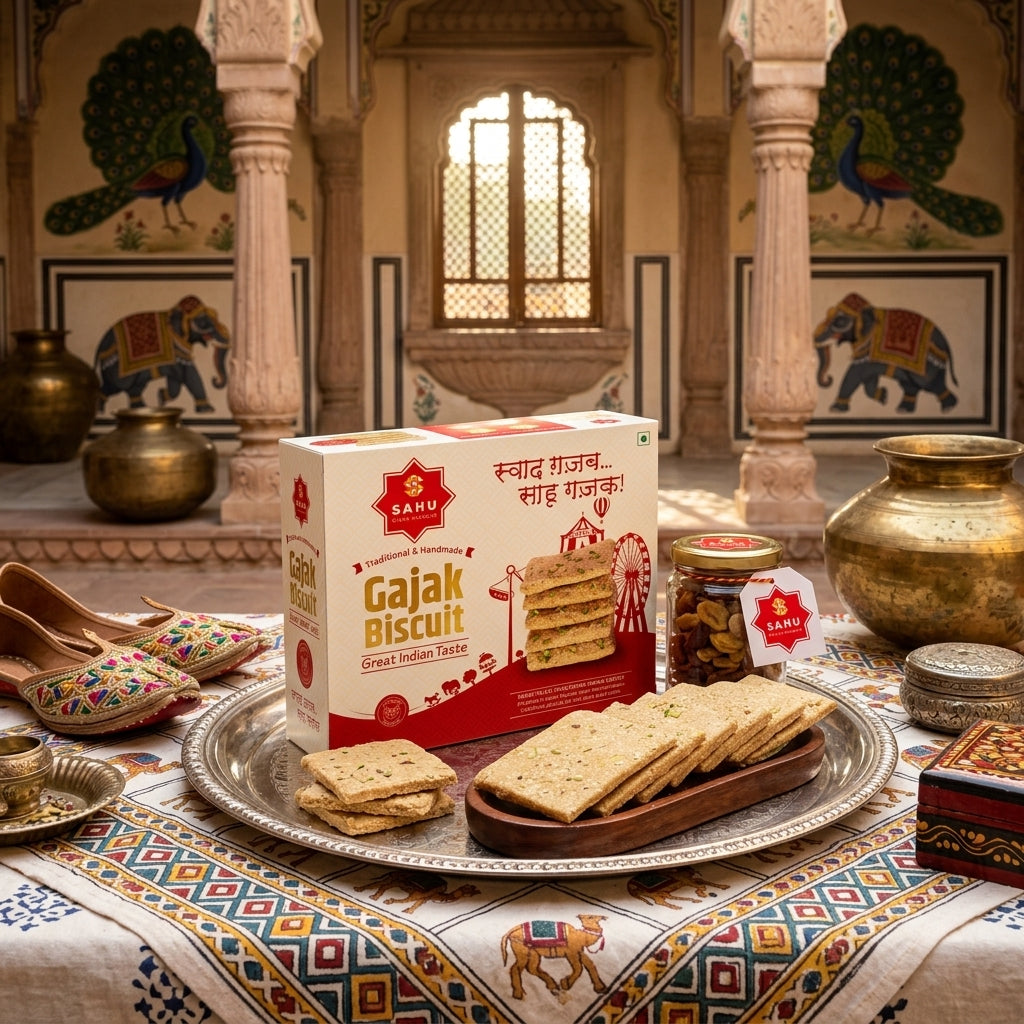
Sahu Gajak Bhandar has been making traditional sesame-jaggery sweets in Menpura, Sawai Madhopur, Rajasthan for over 150 years — using the same handcrafted methods across six generations. Our Lohri range is made with roasted sesame seeds, jaggery, sugar, cow ghee, and cardamom, with no preservatives, no liquid glucose, and no artificial colours or flavours.
Browse our Lohri sweet range: Til Gajak, Til Revdi and Rewari, Peanut Chikki, and Tilkut — all freshly packed and delivered across India.