
Gajak in Modern Indian Cuisine — Creative Ways to Use Traditional Sweets
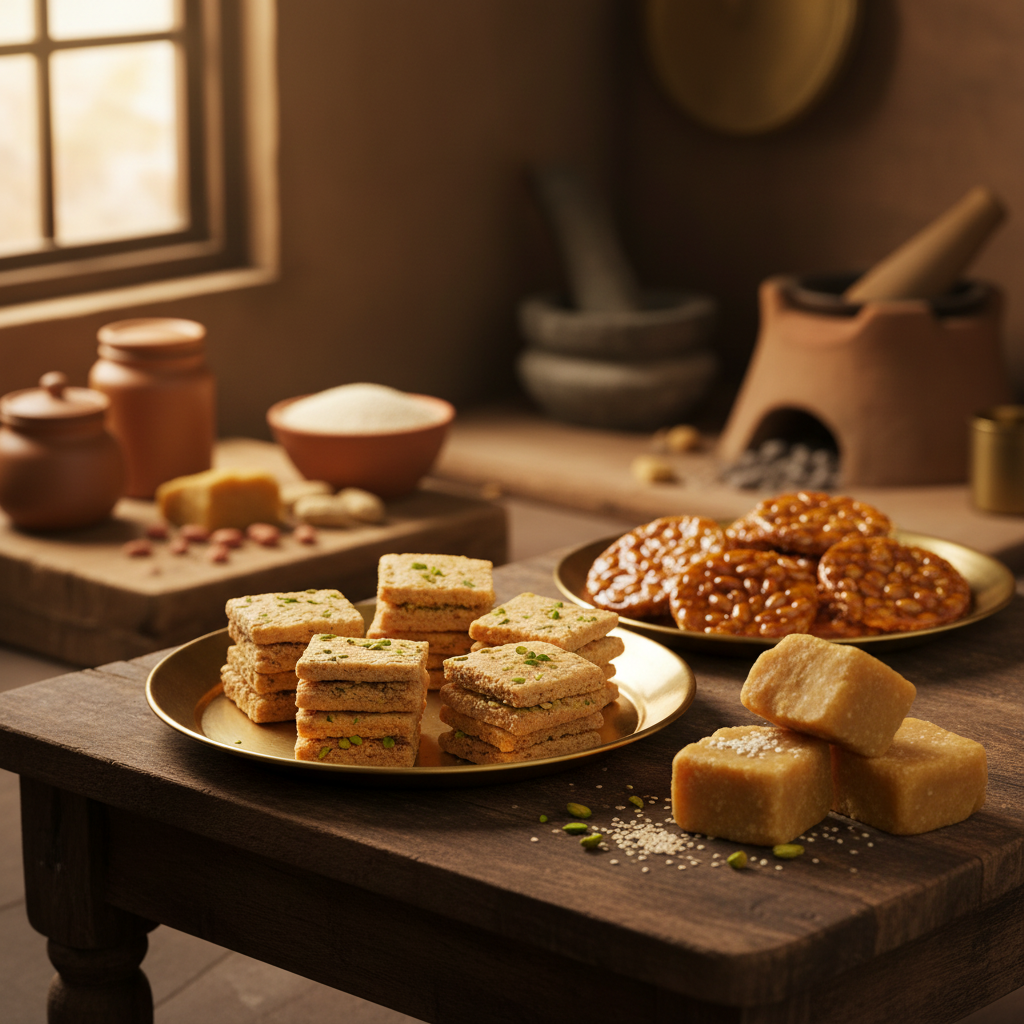
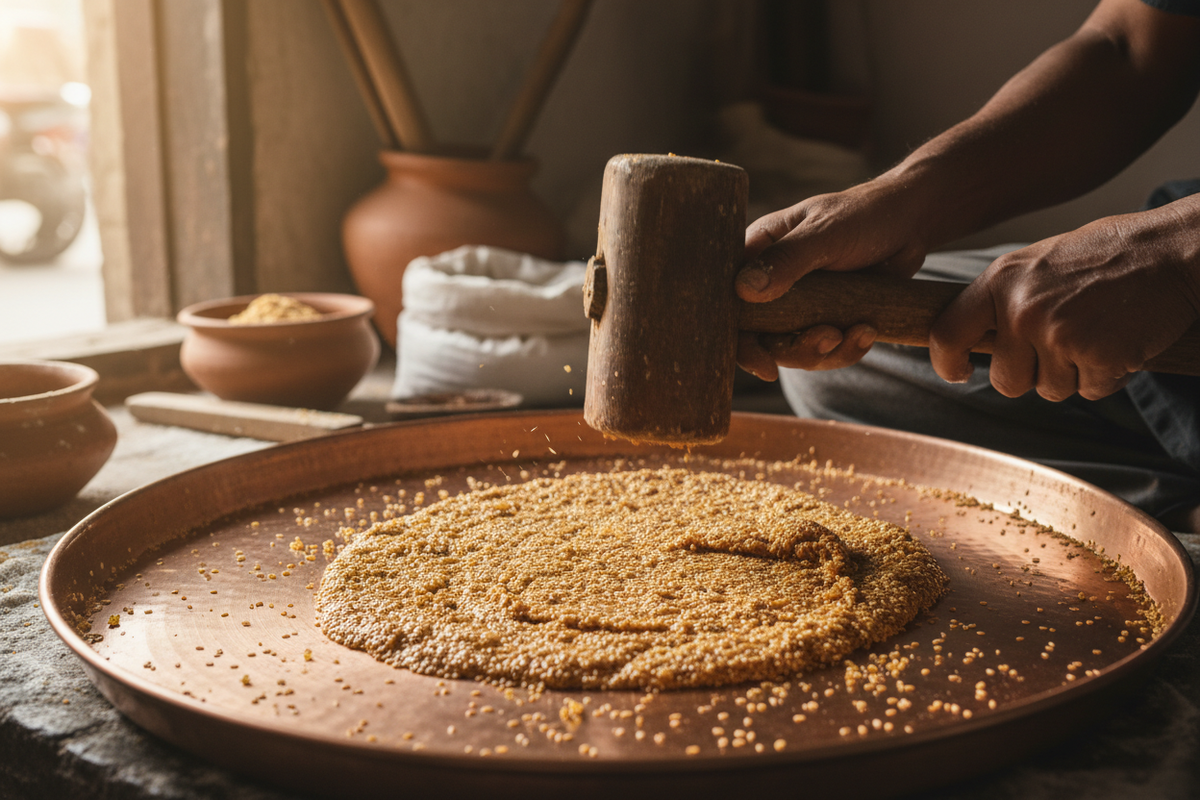
Gajak has been made the same way for generations — roasted sesame, jaggery, cow ghee, hours of hand-hammering. The sweet itself is finished; there is nothing to improve. But how people use it in their kitchens has quietly expanded over the past decade, and Indian home cooks and chefs have found that Gajak's distinctive sesame-jaggery flavour works in contexts beyond the traditional festive serving.
This article shares some of the more interesting ways Gajak is being used in modern Indian cooking — not as a replacement for the original, but as an ingredient that can bridge traditional and contemporary flavours.
Gajak as a dessert topping
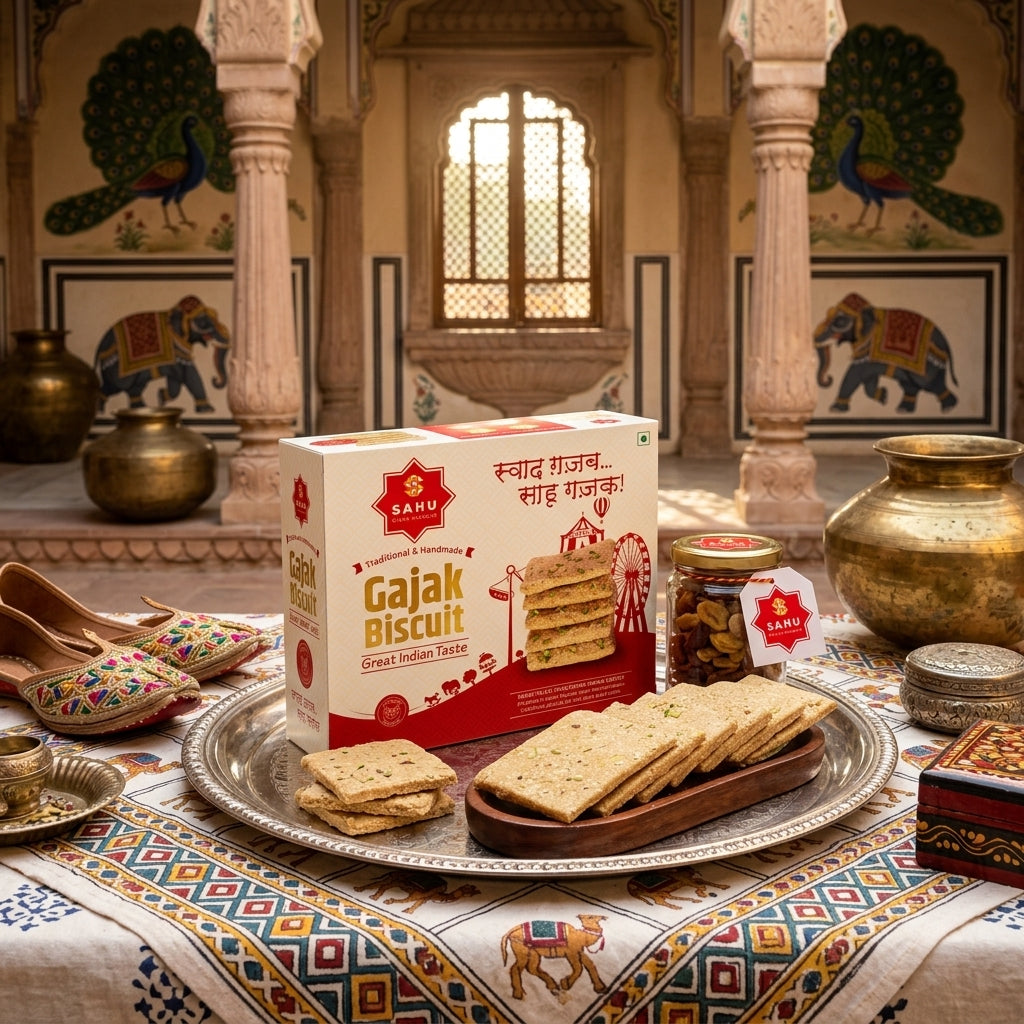
The most straightforward modern use: crumbling Gajak over ice cream, particularly vanilla or malai kulfi. The contrast between the cold, creamy base and the warm, brittle sesame-jaggery crumble is genuinely effective. The jaggery in the Gajak echoes the earthier sweetness of kulfi in a way that refined sugar toppings do not. A small piece of Gajak Biscuit crumbled over a scoop takes about ten seconds and produces a noticeably better result than a plain serving.
Gajak crumble on yoghurt
In the same spirit, Gajak crumbled over thick dahi (yoghurt) — particularly hung curd or Greek-style yoghurt — makes a quick breakfast or dessert that requires no preparation beyond breaking a piece by hand. The sesame and jaggery pair well with the tartness of yoghurt. Adding a few drops of cardamom extract or a pinch of saffron elevates it further.
Gajak in mithai fusion
Some halwais and home bakers have started incorporating Gajak crumble into barfi bases — particularly in layered mithai where one layer is a standard khoya or coconut barfi and another is a compressed Gajak layer. The visual contrast and textural contrast between the two layers work well. Gajak Barfi from Sahu Gajak Bhandar is already a version of this idea — a barfi-style sweet that brings the sesame-jaggery flavour into a softer form.
Gajak powder as a dry chutney
Coarsely ground Gajak mixed with a pinch of chilli powder and a squeeze of lime produces an informal dry chutney that works as a topping for fruit chaat — particularly combinations involving amla (Indian gooseberry), guava, or raw mango. The sweetness of the jaggery and the nuttiness of the sesame balance the sourness and heat. This is a purely informal kitchen adaptation rather than an established recipe, but it is a useful way to use broken or leftover Gajak pieces.
Gajak with chai
The most traditional pairing and still the best one. A piece of Gajak — particularly Gajak Roll or Gajak Biscuit — with unsweetened or lightly sweetened masala chai is a pairing that works precisely because the Gajak provides all the sweetness the chai does not. The sesame flavour complements the ginger and cardamom in the tea. This is not a modern invention — it is how Gajak has been eaten in Rajasthani homes for generations — but it is worth stating clearly for those who encounter Gajak for the first time and are unsure when to eat it.
What Gajak is not suited for
Gajak does not work well in applications that involve moisture or heat after the sweet is made. Adding it to a cake batter or baking it destroys the texture that makes it interesting. It softens in humid conditions, so it is not suitable for decorating cakes or desserts that will sit at room temperature for extended periods. Its best uses are all ones where the crisp, dry texture is preserved until the moment of eating.
Explore Sahu Gajak Bhandar's range
Sahu Gajak Bhandar's Gajak range — including Gajak Biscuit, Gajak Roll, Gajak Barfi, and Dry Fruit Gajak — is available with pan-India delivery. All made with no preservatives, no liquid glucose, and no artificial colours or flavours, using the same recipe followed in Menpura, Sawai Madhopur since the 1870s.