Morena Gajak vs Rajasthani Gajak — What is the Difference?
When people search for the best Gajak in India, two names come up consistently: Morena in Madhya Pradesh, and Sawai Madhopur in Rajasthan. Both have centuries-old traditions of sesame-jaggery sweet-making. Both produce authentic, handmade Gajak that is widely considered the benchmark for quality. And yet they are not the same — the recipes, ratios, textures, and flavour profiles differ in ways that matter to a knowledgeable buyer.
This article explains the differences, so you know exactly what to expect from each tradition.
What is Morena Gajak?
Morena is a city in Madhya Pradesh, approximately 40 kilometres from Agra. Morena Gajak holds a Geographical Indication (GI) tag — India's official certification of regional product authenticity — granted in recognition of the deep-rooted tradition of Gajak making in the Morena and Chambal region.
Morena Gajak is characterised by:
- A higher proportion of sugar relative to jaggery in many traditional recipes, producing a lighter colour and a cleaner, crisper sweetness
- A very thin, almost paper-like flakiness — the extended hand-hammering in Morena produces exceptionally delicate layers
- A lighter, more neutral flavour profile compared to jaggery-heavy Rajasthani Gajak
- A long tradition of commercial production, with several well-known manufacturers based in and around the Morena district
The GI tag applies to Gajak produced in the Morena geographical region and confirms its status as a product of traditional regional craftsmanship.
What is Rajasthani Gajak (Sawai Madhopur)?
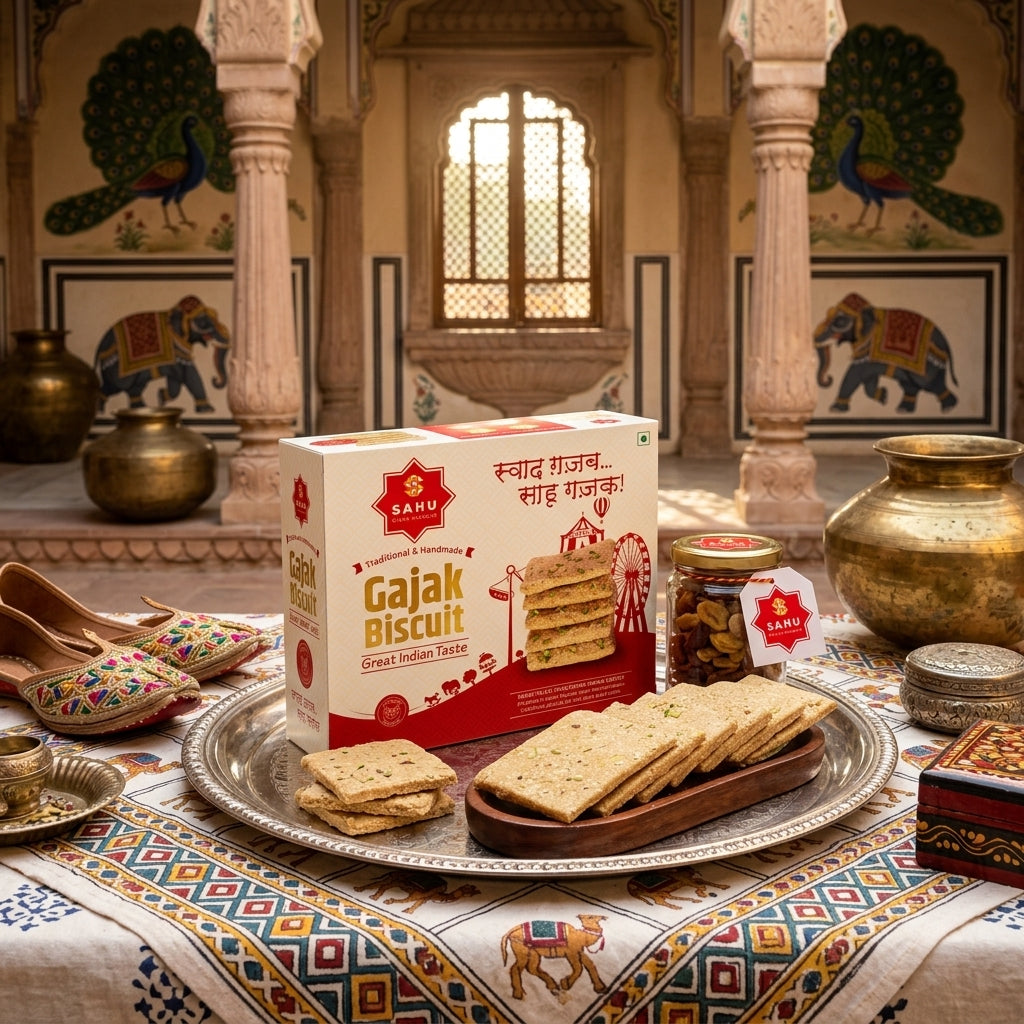
Sawai Madhopur in Rajasthan — specifically the village of Menpura — is the other heartland of traditional Indian Gajak. Sahu Gajak Bhandar has manufactured Gajak in Menpura since 1875, five generations of continuous family production using the same recipe.
Rajasthani Gajak from Sawai Madhopur is characterised by:
- A higher proportion of jaggery (gur) relative to sugar, producing a deeper amber-golden colour and a richer, more complex flavour with pronounced earthy, caramel undertones
- A generous use of cow ghee, which contributes to a distinctive richness and a clean finish that sugar-based Gajak rarely achieves
- A firm, hard, flaky texture — crisp and substantial, with visible layering from the hand-hammering process
- A flavour profile that is more assertive and full-bodied than the lighter Morena style
Rajasthani Gajak does not currently hold a GI tag, but its regional tradition is equally deep-rooted. The Menpura village in Sawai Madhopur has been a centre of Gajak manufacturing for well over 150 years.
Morena Gajak vs Sawai Madhopur Gajak — key differences
Sweetener ratio: Morena Gajak typically uses more sugar. Rajasthani Gajak typically uses more jaggery. This is the single most significant flavour difference between the two traditions.
Colour: Morena Gajak tends to be lighter — ivory to pale golden. Rajasthani Gajak tends to be deeper — golden amber to rich brown, depending on the jaggery used.
Flavour: Morena Gajak has a lighter, cleaner sweetness. Rajasthani Gajak has a deeper, earthier, more complex flavour from the jaggery and cow ghee.
Texture: Both are hard and flaky from hand-hammering. Morena Gajak is often associated with very thin, almost paper-like layers. Rajasthani Gajak is typically more substantial in bite.
GI status: Morena Gajak holds a GI tag. Rajasthani Sawai Madhopur Gajak does not currently hold a GI tag.
Ghee content: Rajasthani recipes typically use more cow ghee, contributing to a richer mouthfeel and a cleaner finish.
Which Gajak is better — Morena or Rajasthani?
This is ultimately a matter of personal preference. If you prefer a lighter, cleaner sweetness and a very delicate flaky texture, Morena Gajak may suit you better. If you prefer a richer, more complex flavour with deep jaggery notes and a robust crunch, Rajasthani Gajak from Sawai Madhopur is likely the better fit.
Both traditions produce genuinely authentic, handmade Gajak. The difference is in the recipe emphasis — not in quality or authenticity.
What is Sugar Gajak vs Jaggery Gajak?
Within both regional traditions, you will find Gajak made primarily with sugar (Sugar Gajak / Cheeni Gajak) and Gajak made primarily with jaggery (Gur Gajak / Jaggery Gajak). Sugar Gajak is lighter in colour, milder, and less complex. Jaggery Gajak is darker, richer, and more traditional. Most authentic Rajasthani recipes use a blend of both, with jaggery as the dominant sweetener.
About Sahu Gajak Bhandar — Sawai Madhopur tradition since 1875
Sahu Gajak Bhandar is based in Village Menpura, Sawai Madhopur, Rajasthan — one of the original centres of Rajasthani Gajak manufacturing. Founded in 1875 by Shri Dhanna Lal Sahu Ji, the family has made Gajak, Tilkut, Chikki, and Til Revdi continuously for five generations. FSSAI Licence No. 12219038000139. 278 verified reviews at 4.87 stars. No preservatives, no liquid glucose, no synthetic colour — the same recipe, the same village, for 150 years.
Browse the full range at sahugajak.com/collections/gajak.
Frequently asked questions
Does Morena Gajak have a GI tag?
Yes. Morena Gajak (from the Morena district of Madhya Pradesh) holds a Geographical Indication tag from the Government of India.
Is Rajasthani Gajak from Sawai Madhopur also famous?
Yes. Sawai Madhopur — specifically Menpura village — is one of the two most celebrated Gajak-producing regions in India alongside Morena. Sahu Gajak Bhandar has manufactured Rajasthani Gajak in Menpura since 1875.
Which Gajak is healthier — jaggery or sugar?
Jaggery Gajak is widely considered the more wholesome option because jaggery is an unrefined sweetener that retains trace minerals absent in refined sugar. However, both contain significant sugar content and should be enjoyed in moderation. (General information, not medical advice.)
Can I buy Morena and Rajasthani Gajak online?
Rajasthani Gajak from Sahu Gajak Bhandar is available directly at sahugajak.com and on Amazon, Flipkart, JioMart, BigBasket, Blinkit, and Swiggy Instamart. For Morena Gajak, search specifically for Morena-based manufacturers on major marketplaces.