

What is Gajak? History, Ingredients and How It Is Made
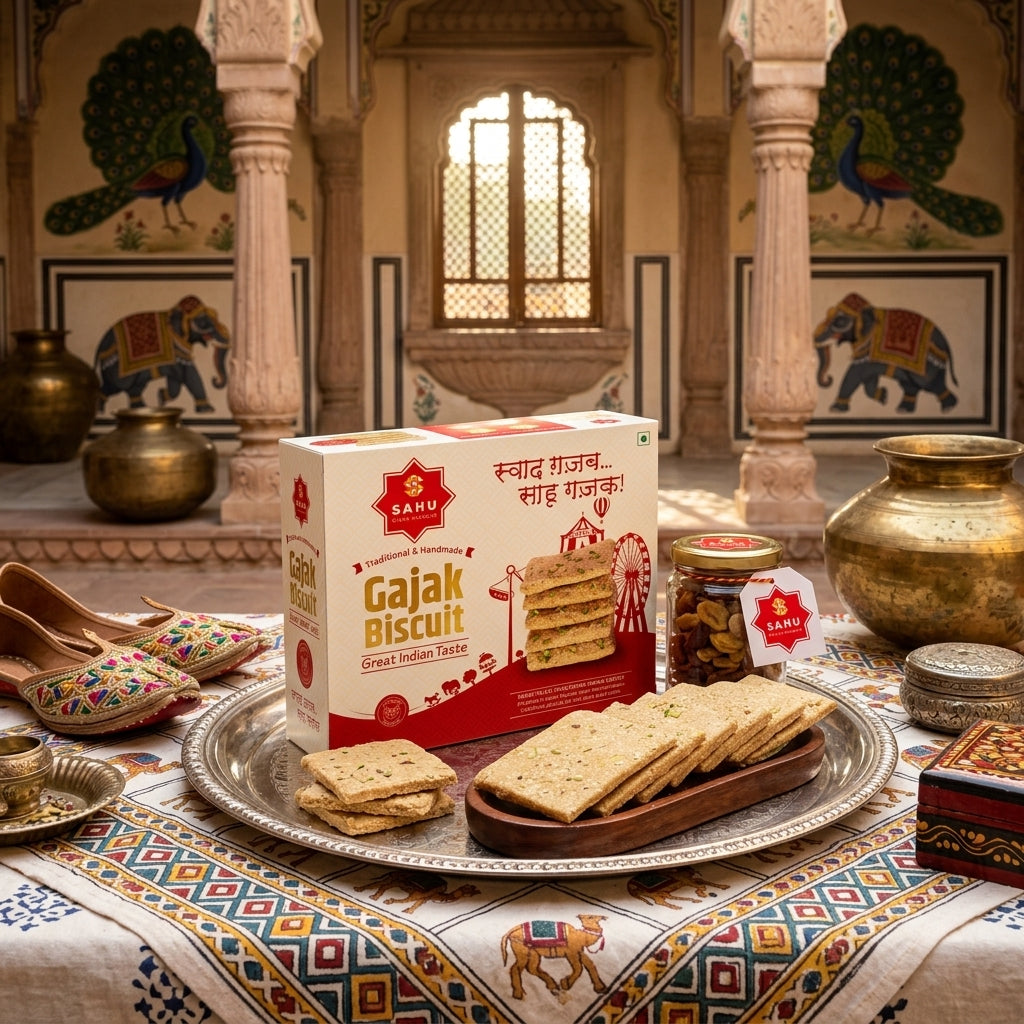
Gajak is a traditional Indian sweet made from sesame seeds (til), jaggery (gur) and cow ghee. It is one of the oldest and most culturally significant winter sweets in India, prepared predominantly in Rajasthan, Madhya Pradesh and Uttar Pradesh. Gajak is closely associated with Makar Sankranti, the winter harvest festival celebrated in January, when sesame and jaggery sweets are exchanged as a symbol of warmth and goodwill.
What does Gajak taste like?
Gajak has a distinctive crisp, brittle texture with a layered, flaky structure. The flavour is a balance of the nutty, earthy taste of roasted sesame seeds with the deep, slightly smoky sweetness of jaggery. Better-quality Gajak carries a subtle bitterness from the sesame that cuts through the sweetness, making it complex rather than cloying. The cow ghee adds a faint richness. Gajak snaps cleanly and melts on the tongue rather than chewing.
History of Gajak
The origins of Gajak are traced to the royal kitchens and confectionery traditions of Rajasthan and Madhya Pradesh, where sesame was a prized winter crop and jaggery the primary sweetener. In Rajasthan, families such as the Sahu family of Menpura, Sawai Madhopur have been manufacturing Gajak for multiple generations. Sahu Gajak Bhandar was established in 1875 by Shri Dhanna Lal Sahu Ji and has been in continuous production across five generations.
Gajak production is deeply seasonal. Fresh sesame is harvested in the winter months (October–December), and cold weather is itself a factor in achieving the correct texture during preparation.
Types of Gajak
- Gajak Biscuit (Khasta Gajak) — Pressed into flat disc or rectangular biscuit shapes. The most common retail format. Very crisp and brittle.
- Gajak Roll — Rolled into a cylindrical form after preparation. Slightly denser, with a layered interior visible when sliced.
- Gajak Patti / Til Patti — Thin slab form, also called sesame brittle. Crunchy and light.
- Gajak Barfi — A softer variant made with additional dry fruits, sugar and ghee.
- Dry Fruit Gajak — Traditional Gajak base with embedded cashews, almonds or raisins. A premium gifting variant.
- Sugar Gajak — Made with refined sugar instead of jaggery, producing a lighter colour and milder flavour.
Gajak ingredients
Traditional Gajak uses three core ingredients: sesame seeds (til), jaggery (gur) and cow ghee. Some variants add cardamom, dry fruits or sugar. Authentic Gajak contains no preservatives, no liquid glucose and no artificial colours or flavours.
How is Gajak made? The traditional process
- Roasting the sesame — Raw sesame seeds are dry-roasted over a low flame until golden, activating the natural oils.
- Preparing the jaggery syrup — Jaggery is melted and cooked to a precise consistency. Temperature determines the final texture.
- Combining sesame and syrup — The roasted sesame is folded thoroughly into the jaggery syrup.
- Hammering — The defining technique. The mixture is placed on a flat surface and artisans hammer it repeatedly for 10–15 hours using wooden mallets. This process works the natural oils out of the sesame seeds, creating the distinctive layered, flaky texture. Mass-produced Gajak skips this step and uses liquid glucose instead.
- Shaping and cutting — While still warm, the Gajak is shaped into biscuits, rolls or slabs, then left to cool and set.
Gajak vs mass-produced sesame sweets
The primary difference between authentic Gajak and commercial sesame confectionery is the use of liquid glucose. Factory production replaces the hours-long hammering process with liquid glucose as a binding agent, producing a stickier, sweeter product that lacks the layered texture of the original. Authentic Gajak — such as that produced by Sahu Gajak Bhandar — contains no liquid glucose and no preservatives.
Shelf life of Gajak
Gajak Biscuit, Gajak Roll, Gajak Patti and Sugar Gajak have a shelf life of 180 days from packing when stored in a cool, dry, airtight environment. Gajak Barfi has a shelf life of 120 days.
When is Gajak eaten?
Gajak is primarily a winter sweet, consumed from November through February. It is most closely associated with Makar Sankranti (January 14), when families across India exchange til-gur sweets. It is also popular during Lohri, Diwali and as a corporate gifting sweet through the winter season.
Where to buy authentic Gajak online
Sahu Gajak Bhandar (Est. 1875) manufactures traditional Gajak from Village Menpura, Sawai Madhopur, Rajasthan. All products are FSSAI-certified (Licence No. 12219038000139), free from preservatives and liquid glucose. Available at sahugajak.com with pan-India delivery in 2–5 working days, and on Amazon, Flipkart, JioMart, BigBasket, Blinkit and Swiggy Instamart.





,%20jaggery%20(gur)%20and%20cow%20ghee.%20It%20is%20one%20of%20the%20oldest%20and%20most%20culturally%20significant%20winter%20sweets%20in%20India,%20prepared%20predominantly%20...)